
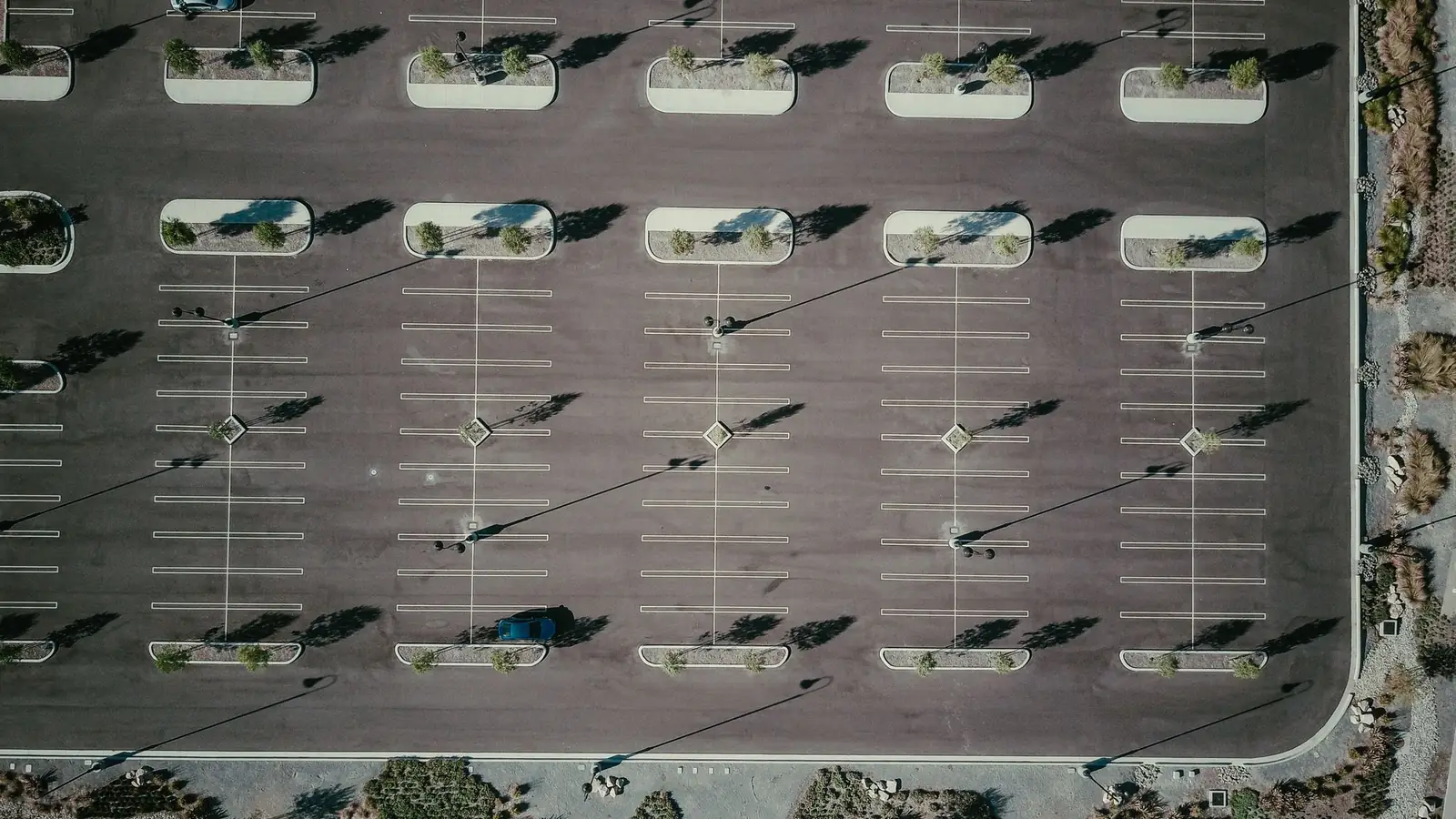
New Braunfels Sealcoating & Striping — Parking Lot Striping & Asphalt Repair
New Braunfels sealcoating, parking lot striping and asphalt repair for commercial properties, HOAs and industrial sites. Every quote is itemized by square foot, linear foot and stall count, so you can see what you’re paying for.
Site assessment · Itemized proposal · No coal-tar sealers
Request a quote
Send the property address, rough lot size and what needs attention. Prefer the phone? (830) 402-1872
What sealcoating and restriping typically changes
Drag the orange handle up or down: the top shows the lot before, the bottom after.
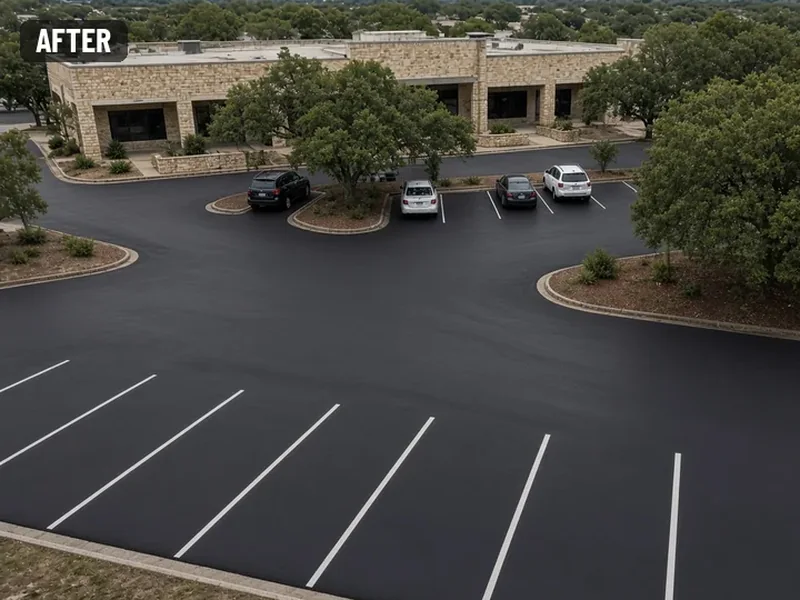
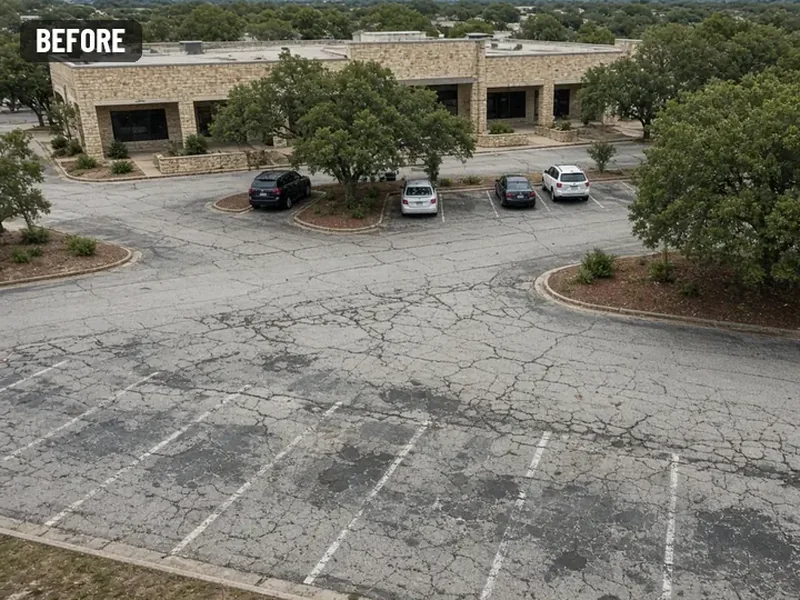
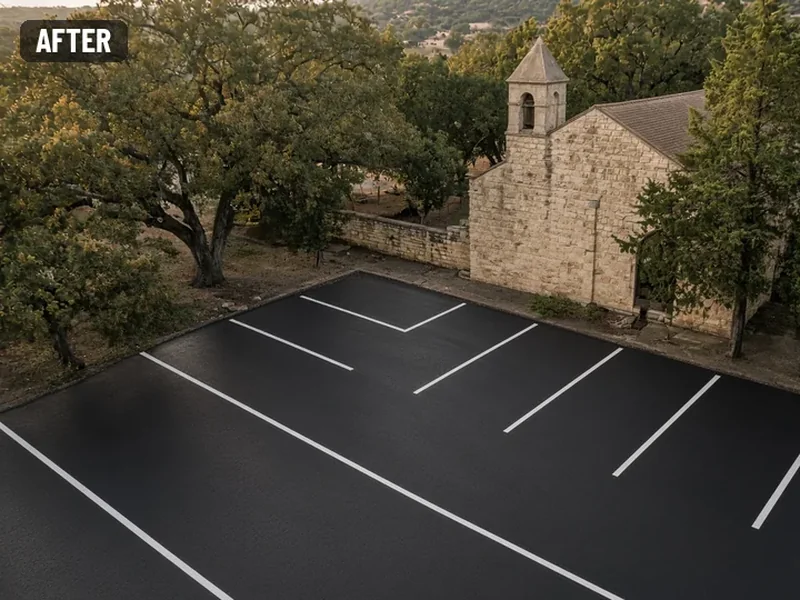
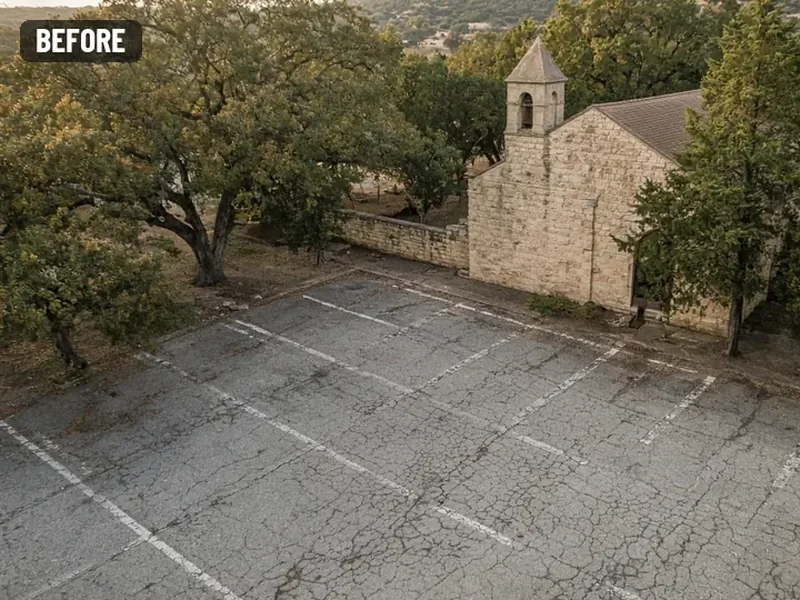
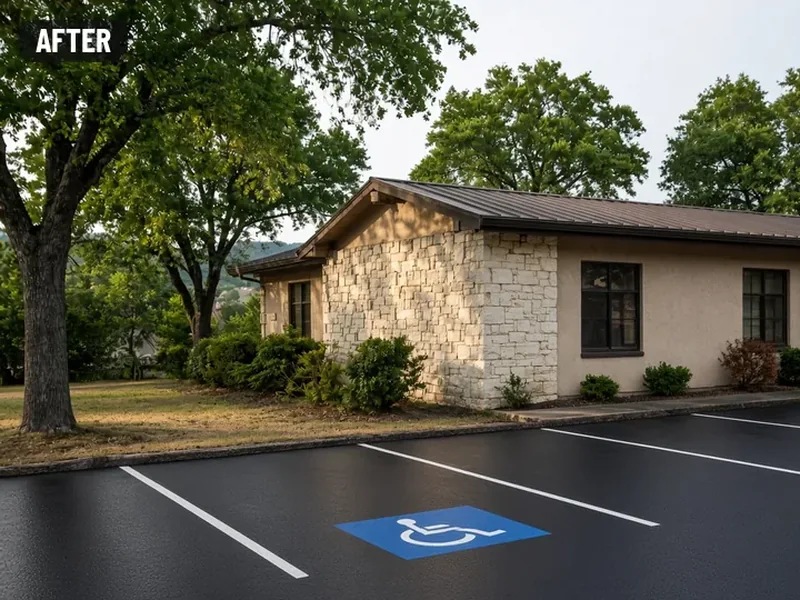
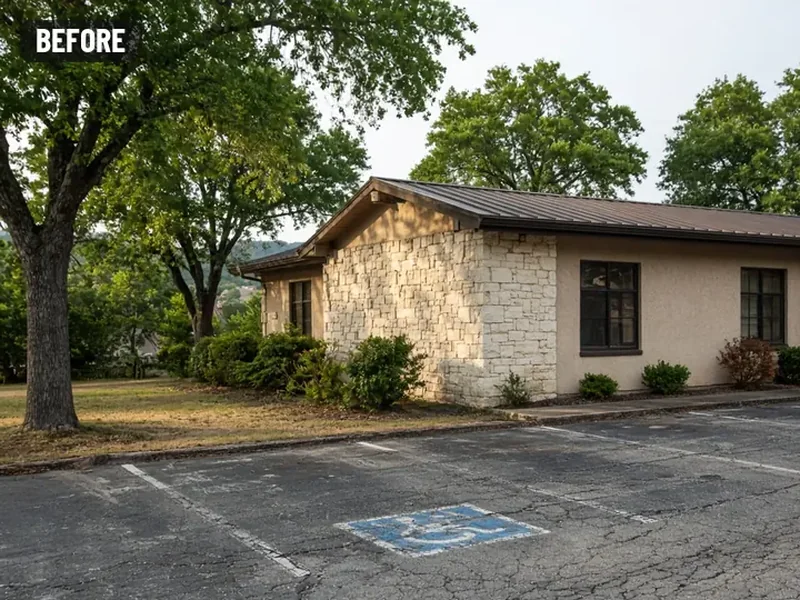
Commercial Sealcoating Services
Commercial Parking Lot Sealcoating
Asphalt starts losing its binder from the day it’s paved. Sunlight oxidizes it, water gets into the voids, and dripped oil and fuel soften the surface. A commercial sealcoat is a thin, sacrificial layer that takes that wear so the asphalt underneath doesn’t. Our standard commercial system is two thin coats over a cleaned, crack-sealed surface. We price it per measured square foot, with the square footage written on the proposal so you can compare bids directly. For a full breakdown of our commercial sealcoat process, see our commercial asphalt sealcoating service.
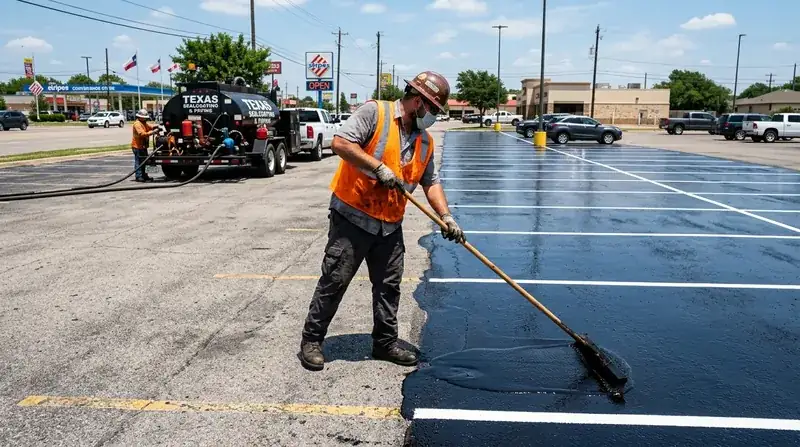
Asphalt Emulsion Sealcoat, No Coal Tar
We specify asphalt-emulsion sealers, not coal-tar products. That matters here. According to the U.S. Geological Survey, coal-tar-based sealcoat contains about 1,000 times more PAHs (polycyclic aromatic hydrocarbons) than asphalt-based sealcoat. San Antonio banned coal-tar sealants citywide starting January 1, 2017, and Austin has restricted them since 2005. New Braunfels sits on the Edwards Aquifer, and the Comal Springs that feed the Comal River are the largest natural freshwater springs in Texas. In 2012 the Edwards Aquifer Authority voted to prohibit coal-tar sealants on the recharge zone in New Braunfels and San Marcos. Using a sealer with no coal tar keeps your property on the right side of those rules and of tenants who ask what’s going on their lot.
Sand-Slurry and Polymer-Modified Sealcoat
Busy drive lanes, drive-thru loops and loading aprons need more grip and wear resistance than a basic coat gives. On those areas we can add silica sand and polymer or latex additives to the sealer mix. That improves traction and helps the film hold up to tire scrubbing. These additives cost more per gallon, so we list them as a separate line item and tell you where they’ll pay off and where they won’t.
HOA, Apartment and Multifamily Sealcoating
Residential communities have cars parked around the clock and residents who need to get in and out every day. That makes sealcoating there more about logistics than chemistry. We split the lot into sections and give the property manager a printable notice schedule for residents. Sealer and paint need time to cure before traffic goes back on, so we reopen each section only after the product’s recommended cure window. The goal is that nobody’s car gets towed or tracked through wet sealer.
Oil Spot Priming and Degreasing
Oil and transmission fluid soak into asphalt and stop sealer from bonding. That’s why a freshly sealed lot can show dark rings around old stains within months. Before we seal, we scrape and clean saturated spots and treat them with an oil-spot primer. We list oil-spot treatment as its own line item instead of hiding it in the square-foot rate. Restaurant pads, fleet yards and auto-service sites often need more of it, and you should see that before the job starts.
Parking Lot Striping and Pavement Markings
Parking Lot Restriping
Faded stall lines make people park crooked and lose spaces, and they make a well-run property look neglected. Restriping follows your existing layout with fresh, waterborne traffic paint. It’s the most common striping job we quote, and it’s usually priced per stall plus a small number of stencils and arrows. Our parking lot striping service page covers line widths, paint systems and how often restriping is typically needed.
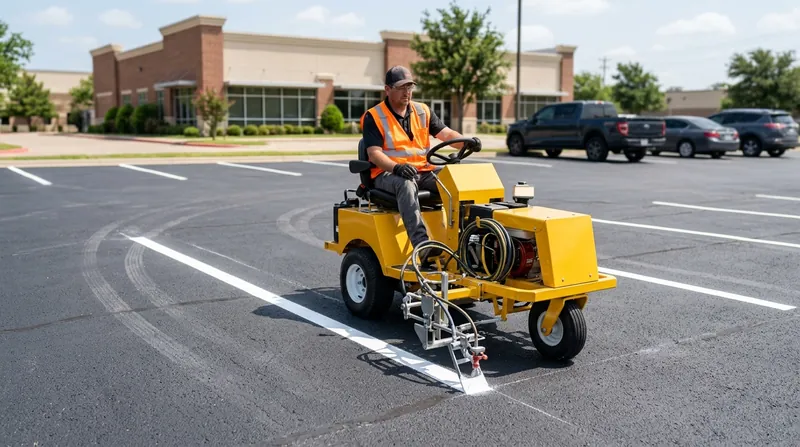
New Parking Lot Layout and Re-Layout
New asphalt, a full overlay or a change in how the lot is used means the old lines no longer apply. On a new layout we measure, chalk and paint from a plan: stall sizes, drive aisle widths, one-way flow, loading zones and accessible spaces. It takes longer than a restripe and costs more per stall. It’s also your chance to recover parking you lost to a bad original layout.
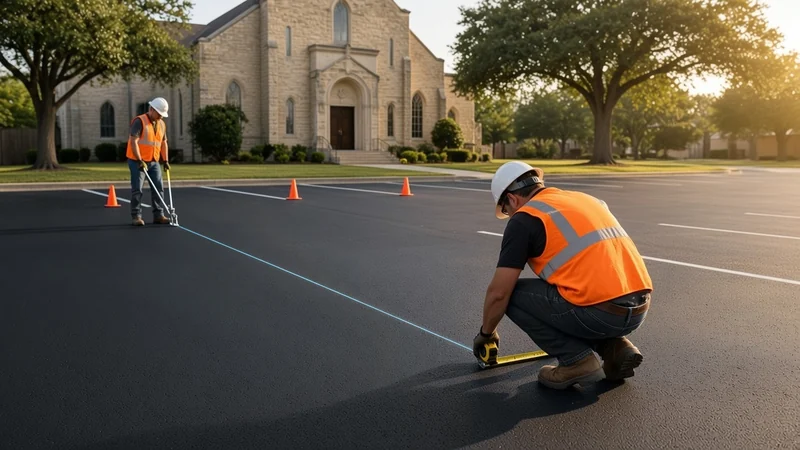
ADA Parking Space Striping
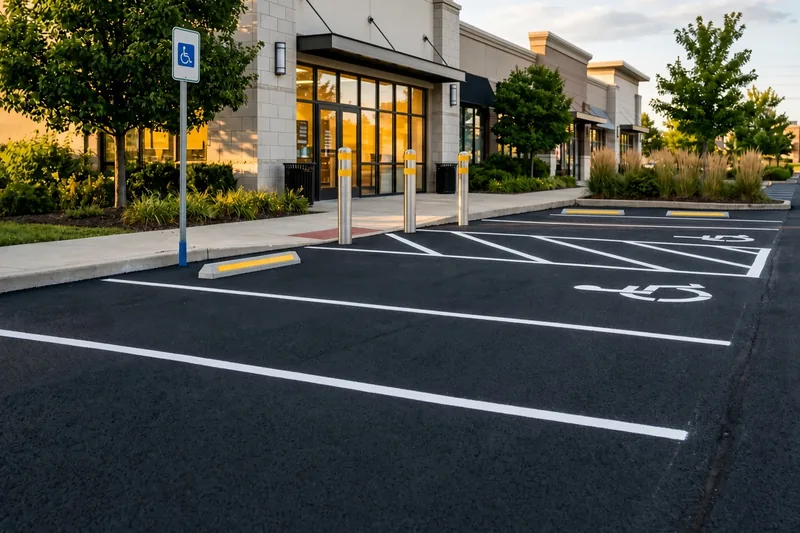
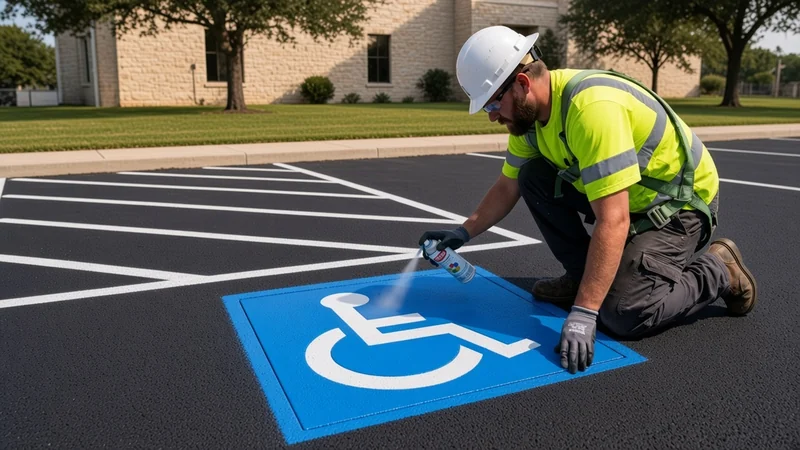
Accessible parking follows the 2010 ADA Standards. Their Table 208.2 sets the minimum number of accessible spaces. A lot with 1–25 spaces needs one, 26–50 needs two, 51–75 needs three, and 76–100 needs four. For every six accessible spaces, or any fraction of six, at least one must be van-accessible. Section 502 requires car spaces to be at least 96 inches wide with an access aisle at least 60 inches wide. Van spaces must be 132 inches wide, or 96 inches with a 96-inch aisle. We lay out, stencil and hatch accessible stalls to those dimensions and flag slope or sign problems we can see on site. Details are on our ADA compliance striping page.
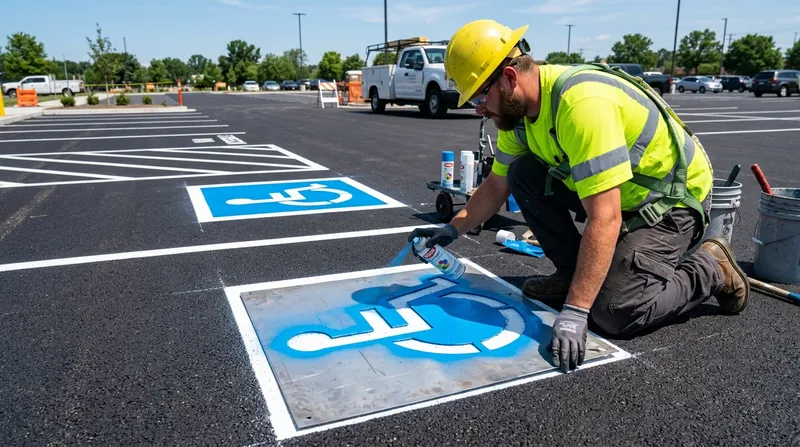
Fire Lane Painting and Red Curb Striping
Fire lanes are part of a building’s fire protection, and faded ones are an easy citation. Under Texas Occupations Code §2308.251, when no local rule applies, fire lane curbs must be painted red with white “FIRE LANE—TOW AWAY ZONE” lettering at least three inches tall, repeated at least every 50 feet. New Braunfels has its own standard detail, which references the 2018 International Fire Code. Where there’s no curb, it shows a 6-inch red stripe with 4-inch white lettering about every 25 feet. We confirm the current requirement with the city before we paint. See fire lane painting and red curb striping.
Directional Arrows, Stop Bars, Crosswalks and Stencils
Arrows, stop bars, crosswalks and word stencils like “NO PARKING,” “LOADING ZONE” and “VISITOR” control how a lot actually moves. Missing or contradictory markings are a common reason drivers cut across stalls or go the wrong way down a one-way aisle. We price stencils individually so you can choose what to add. Crosswalk placement follows the accessible route from accessible parking to your entrance. Specialty markings are covered on our specialty striping page.
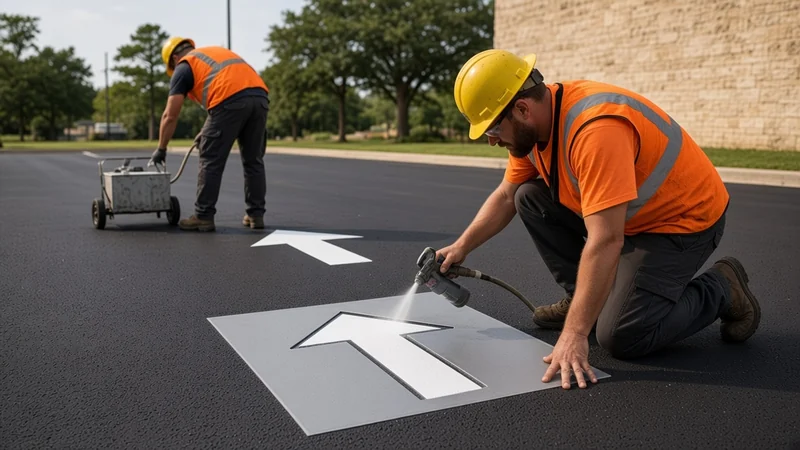
Warehouse Floor Striping and Industrial Safety Markings
Distribution centers, manufacturing floors and shop buildings need forklift lanes, pedestrian walkways, rack-end markings and staging-area outlines that hold up to equipment traffic. Floor striping inside is a different job from parking lot paint. Surface prep, product choice and cure time all change on sealed or polished concrete. Plants along the I-35 corridor run on tight shift schedules, so we plan this work around shift changes and weekend downtime. More on our warehouse floor striping page.
Asphalt Repair and Crack Sealing
Hot-Pour Crack Sealing
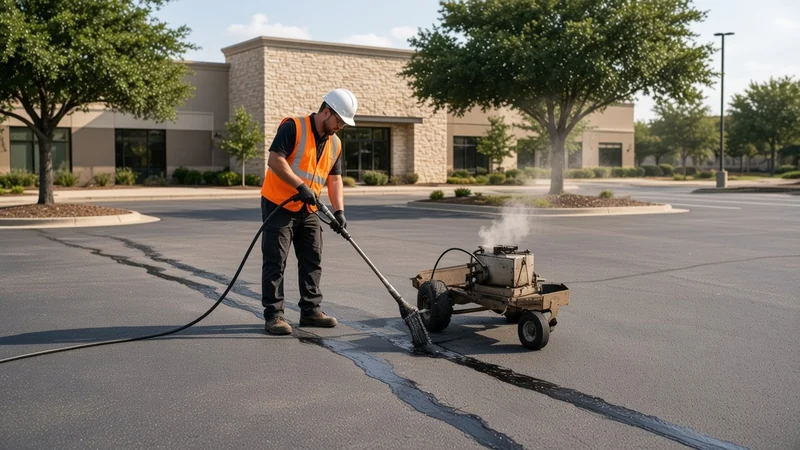
Water getting into the base is what turns a hairline crack into a pothole. Hot-pour rubberized crack sealant stays flexible through Texas heat and the occasional freeze, and it keeps water from reaching the base. We route or clean cracks, blow them out, and fill them before any sealcoat goes down. We price crack sealing by the linear foot and state the included footage on the proposal, so a “crack sealing as needed” clause can’t turn into a surprise invoice. See our hot-pour crack sealing service.
Pothole Repair and Patching
Potholes damage vehicles, create trip hazards and generate complaints from tenants and customers. A cold-patch bag is a temporary fix. A lasting repair means cutting out the failed area, fixing the base where needed, and compacting hot-mix asphalt flush with the surrounding pavement. We mark every patch area with you during the walk-through so you can see exactly what’s included. Our commercial pothole repair page covers the methods.
Asphalt Repair, Skin Patching and Remove-and-Replace
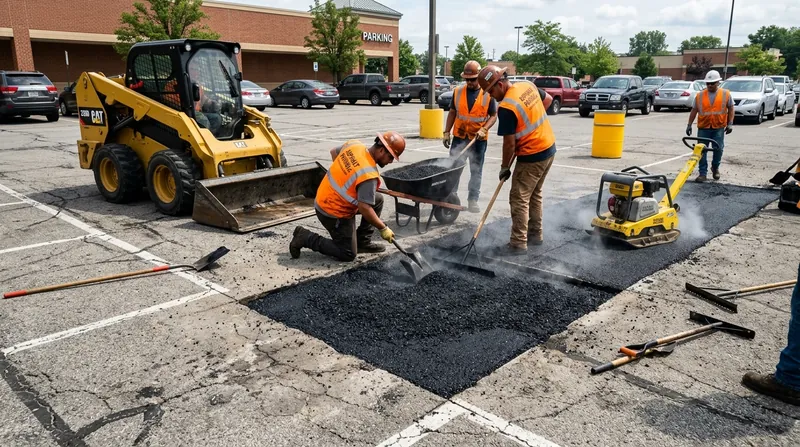
Alligator cracking, sunken areas and broken edges mean the problem is structural, and no coating will hide it. Depending on how deep the damage goes, we recommend a skin patch, a mill-and-fill, or full-depth remove-and-replace. Each one goes on the proposal as its own line, sized by square footage. If a section really needs an overlay or repaving rather than repair, we’ll tell you that directly. Learn more about commercial asphalt repair.
Surface Prep, Cleaning and Line Removal
Commercial Parking Lot Power Washing
Sealer and paint can only bond to a clean surface. Dust, tire rubber, bird droppings and restaurant grease all break that bond. We blow and sweep the lot before coating. Dumpster pads, drive-thrus and fuel islands get pressure washing, with hot water where grease is the problem. Washing on its own also helps a lot look cared for between sealcoat cycles. See parking lot power washing.
Parking Lot Line Removal and Stripe Eradication
Painting black over old lines doesn’t erase them. In low sun or rain, ghost lines show through and drivers follow the wrong layout. When a lot is re-laid out, we remove old markings by grinding, blasting or another method suited to the surface, then lay out the new plan on a clean surface. Details on our line removal page.
Sandblasting and Curb Paint Removal
Old red and yellow curb paint that’s peeling, layered or in the wrong place has to come off before new paint will hold. Abrasive blasting takes curbs and concrete back to a sound surface without the uneven look of a wire brush. Our sandblasting and curb paint removal page covers when blasting makes sense. Overall surface preparation is on our surface prep services page.
Parking Lot Hardware and Installations
Concrete and Rubber Wheel Stop Installation
Wheel stops keep bumpers off sidewalks, storefront glass and landscaping, and they keep stalls lined up after the paint fades. Concrete stops are heavy and durable. Recycled-rubber stops are lighter and easier to reset. We pin each one into the pavement and line them up with the stall layout so they help the striping. See wheel stop installation.
Steel Bollards and Traffic Sign Installation
Bollards protect storefronts, utility equipment and pedestrian areas from vehicle impact. Posted signs, including accessible-parking, fire lane and stop signs, tell drivers what the paint can’t. New Braunfels’ fire lane detail, for example, calls for a sign plate of at least 12 by 18 inches with a white reflective background and red legend. We install sign posts and bollards at the locations your layout and local rules call for. See bollard and traffic sign installation.
Speed Bump and Speed Hump Installation
Cut-through traffic and drivers speeding through parking aisles are a liability. We install bolt-down rubber speed bumps and humps and place them with drainage in mind. Each one gets matching warning paint and signs. Our speed bump installation page explains the difference between bumps and humps. All hardware work is grouped on our parking lot installations page.
Commercial Properties We Serve
Retail Centers and Restaurant Pads
Retail lots get the heaviest turnover and the most attention from customers and tenants. Drive-thrus, delivery zones and grease-heavy dumpster pads wear faster than the rest of the lot. We phase work around store hours so tenants can stay open.
Office Parks and Medical Offices
Medical and professional offices often have more accessible parking than the minimum and patients who arrive with limited mobility. Clear accessible stalls, a direct accessible route and easy-to-read signs matter more here than almost anywhere else.
Industrial, Warehouse and Fleet Facilities
Truck courts, trailer parking and forklift traffic put loads on pavement that passenger cars never do. We focus on base repair, crack sealing and long-lasting markings sized for heavy equipment.
Churches, Schools and Community Facilities
These lots fill up all at once on Sundays, event nights and school drop-off, then sit mostly empty. That makes weekday and summer windows ideal for sealcoating and restriping with little disruption.
Why Property Managers Choose New Braunfels Seal and Stripe
We think pavement maintenance should be the least stressful line in your budget. A sealcoat works a lot like sunscreen. It doesn’t fix damage that’s already there, but put it on at the right time and it slows the damage that’s coming. So we start with repairs, put the right coating on top, and finish with markings that match how your lot actually gets used. You get one contractor for the whole lot, one itemized proposal, and photo documentation before and after.
How a Project Works
1. Site Walk and Itemized Quote
We walk the property with you or your maintenance lead. We measure square footage, count stalls, map cracks and potholes, and note fire lane and accessibility issues. You get a written proposal with each scope item, its quantity and its unit price.
2. Scheduling and Tenant Notice
We work out phases around your busiest hours and give you notice language for tenants or residents. Weather can move a date. Sealer needs dry pavement and suitable temperatures, so we watch the forecast and talk to you early if anything shifts.
3. Prep and Repair
Cleaning, oil-spot treatment, line removal, crack sealing and patching all happen first. Coating over an unrepaired surface is how a sealcoat fails early.
4. Sealcoat Application
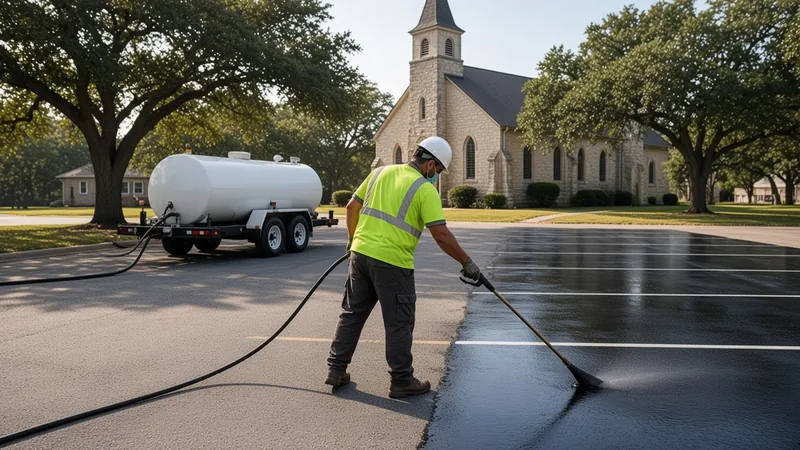
Two thin coats go down by spray, squeegee or both, depending on the surface. Each section stays closed until the sealer has cured per the manufacturer’s label.
5. Striping, Stencils and Hardware
Stalls, accessible spaces, fire lanes, arrows and stencils are painted on the cured surface. Wheel stops, signs and bumps go in last.
6. Final Walk-Through and Closeout
We walk the finished lot with you, take care of any touch-ups, and send the photo record for your files.
What Sealcoating and Striping Cost in 2026
Prices depend on lot size, condition and access. Here are published 2026 national ranges to help you set a budget before you collect bids. These are not our prices. Your quote comes after the site walk.
| Item | Typical 2026 range | Source |
|---|---|---|
| Commercial sealcoating (2 coats, basic prep) | about $0.17–$0.40 per sq ft; many medium jobs $0.20–$0.32 | Tidy Parking, 2026 |
| Medium lot, 20,000–50,000 sq ft | roughly $4,000–$16,000+ | Tidy Parking, 2026 |
| Restripe, standard stall | about $4–$8 per stall | ProPaving, Jul 2026 |
| New layout, standard stall | about $6–$12 (some guides to $25) per stall | ProPaving; PaveGauge, 2026 |
| ADA stall with symbol and aisle hatching | about $30–$60 (some guides to $100) each | ProPaving; PaveGauge, 2026 |
| Fire lane / red curb painting | about $0.50–$1.50 per ft restripe; $1–$3 per ft (both faces) | ProPaving; PaveGauge, 2026 |
| Job minimum / mobilization | about $250–$500 | ProPaving; PaveGauge, 2026 |
Where “cheap” bids get expensive. Crack sealing listed as “as needed” with no footage. Patching left to “time and materials.” Oil-spot treatment left out. Night or weekend work that wasn’t in the original price. Our proposals list included quantities and unit prices for extras so you can compare bids side by side.
Bundle and save on mobilization. Getting crews and equipment to the site is a fixed cost. Doing sealcoating, crack sealing and striping in one sequence usually costs less than three separate visits.
Texas accessibility registration. If your total project cost is $50,000 or more, the Texas Department of Licensing and Regulation (TDLR) requires it to be registered and reviewed under the Architectural Barriers program. Smaller projects still have to meet the same accessibility standards. A restriping job that changes accessible spaces can fall under this rule. We’ll point out when your scope gets close to that threshold.
Five Things to Know About Pavement in New Braunfels
Heat and Sun Are Your Lot’s Biggest Enemy
New Braunfels has a humid subtropical climate with long, hot summers. Sun and heat oxidize asphalt binder, turning dark, flexible pavement gray and brittle. Regular sealcoating, with crack sealing in between, is how commercial properties slow that down.
The Aquifer Shapes What Goes on Your Lot
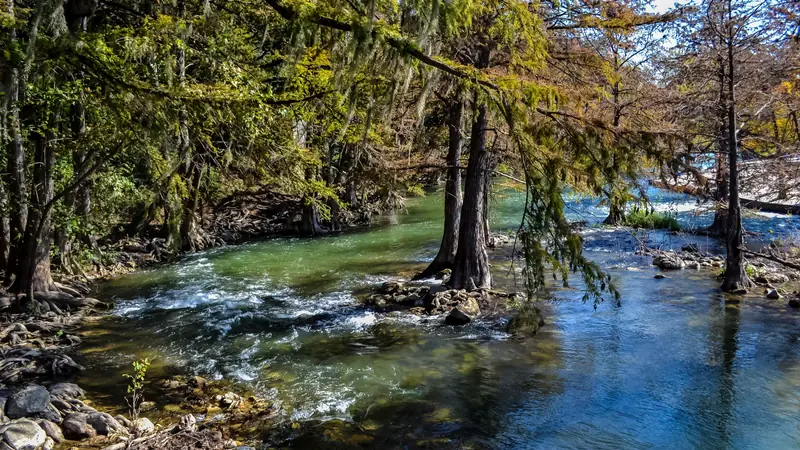
The city sits along the Balcones Fault, where the Hill Country meets the prairie. The Edwards Aquifer surfaces there as Comal Springs. That’s why coal-tar sealants are restricted on parts of the aquifer, and why we use asphalt-emulsion products everywhere we work.
Fire Lanes Are Inspected, Not Optional
Faded fire lanes are among the easiest code issues to spot and cheapest to fix. New Braunfels publishes its own fire lane access detail. State law sets a fallback standard where there’s no local rule.
Accessible Parking Counts Are Set by Table, Not Judgment
The number of accessible spaces you need depends on total spaces in each parking facility, under Table 208.2 of the 2010 ADA Standards. Restriping is a good time to check your count, because lots that were re-laid out over the years often end up below the minimum.
Growth Means More Traffic on Older Lots
New Braunfels grew from 36,494 people in 2000 to 90,403 in the 2020 Census. It was one of the fastest-growing U.S. cities of the 2010s, and the Census Bureau’s 2025 estimate is 122,492. More cars on lots built for a smaller town means faster wear and a stronger case for scheduled maintenance.
Serving New Braunfels and the I-35 Corridor
New Braunfels is the Comal County seat, between San Antonio and San Marcos. We work across the city’s commercial corridors: along I-35, around Loop 337, out SH 46, up FM 306 toward Canyon Lake, and around New Braunfels National Airport. Outside the city, we serve commercial properties in San Marcos, Seguin, Canyon Lake, Boerne, Schertz and Cibolo.
Frequently Asked Questions
How often should a commercial parking lot be sealcoated in Texas?
Many lots are resealed every two to three years. The Greater Edwards Aquifer Alliance notes that applicators commonly suggest that cycle. Heavy traffic, full sun and oil drips can shorten it, and shaded, lightly used lots can go longer. We’ll tell you honestly whether your lot needs it yet.
How long does my lot have to be closed?
It depends on the product, temperature and humidity. Sealcoat needs a cure period before vehicles go back on, per the manufacturer’s label, and traffic paint needs time to dry. Phasing lets most commercial properties keep part of the lot open the whole time.
Do you use coal-tar sealer?
No. We use asphalt-emulsion sealers. Coal-tar products contain far higher levels of PAHs and are restricted in San Antonio, Austin and parts of the Edwards Aquifer recharge zone.
Can you make my parking lot ADA compliant?
We stripe accessible spaces, access aisles and symbols to ADA dimensions and counts, and we install accessible-parking signs. Full compliance also covers slopes, curb ramps and accessible routes. A Registered Accessibility Specialist (RAS) makes formal compliance determinations in Texas, and we’re glad to work alongside yours.
Should I repair, seal or repave?
If the pavement is mostly sound with oxidation and minor cracking, crack seal and sealcoat. If you have localized alligator cracking or potholes, patch first and then seal. If failure is widespread, sealcoat won’t fix it, and we’ll tell you that an overlay or repave is the better spend.
Do you stripe new lots and re-layouts or just restripes?
Both. Restripes follow the existing lines. New layouts and re-layouts start from measurements and a plan, which is the time to fix aisle widths, accessible-space counts and traffic flow.
Request a Quote in New Braunfels
Tell us about the property: address, approximate size, and what’s bothering you (cracks, potholes, faded lines, a fire lane write-up or an accessibility question). We’ll schedule a walk-through and send an itemized proposal.
What happens when you call
1. Tell us about the property. Give us the address, roughly how big the lot is and what’s bothering you, whether that’s cracks, potholes, faded lines, a fire lane write-up or an accessibility question. If you can’t get through, the assessment form at the top of this page works too.
2. We walk the lot. We set a time to look at it with you or your maintenance lead. We measure the asphalt, count stalls and mark cracks and failed areas.
3. You get an itemized proposal. Each line shows the quantity and unit price, along with anything that isn’t included. There’s no obligation, and nothing is scheduled until you approve it.
Call to set up a site assessment
Call (830) 402-1872Or email info@newbraunfelssealandstripe.com
Request a QuoteThe form doesn’t sign you up for text messages. Privacy · Terms