
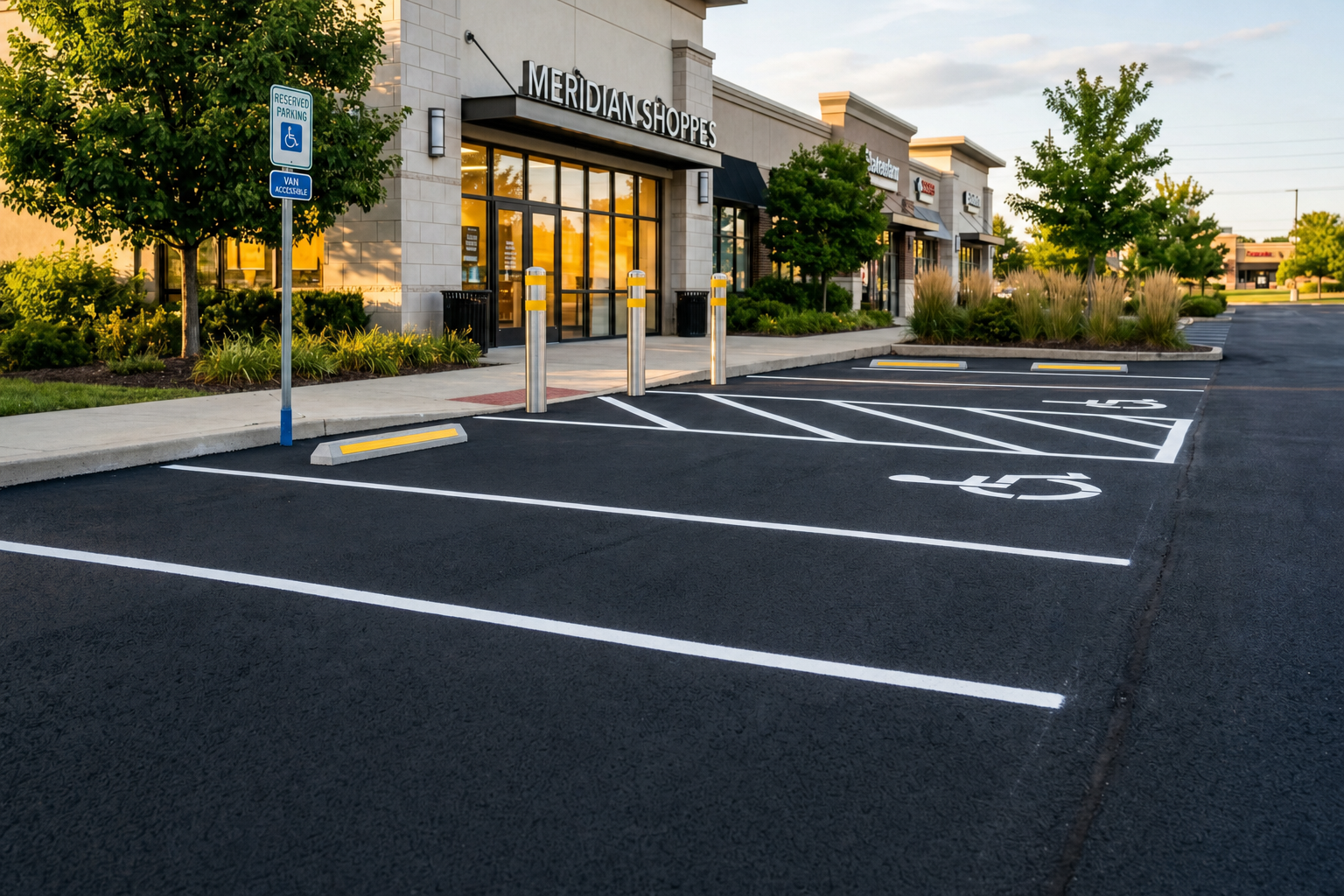
Parking Lot Striping & Sealcoating Services in New Braunfels, TX

New Braunfels Seal and Stripe has provided parking lot striping, sealcoating, and pavement maintenance services in New Braunfels for over 20 years. We use laser-guided striping equipment and DOT-approved traffic paint to deliver straight, even lines and durable pavement markings that hold up under Texas weather conditions.

Our work covers interior and exterior surfaces, from warehouse floors to retail parking lots across New Braunfels, Canyon Lake, Seguin, Schertz, Cibolo, and the greater San Antonio area. Every job gets an itemized quote listing materials, labor, and coverage before work begins, and every project is documented with before-and-after photos for quality assurance.

Crew applying fresh black sealcoat to a commercial parking lot

Sealcoating

New Braunfels Seal and Stripe applies commercial-grade, industrial-strength sealcoating rather than diluted mixes. Before any sealer goes down we clean and prep the surface thoroughly, which is the difference between a repair that lasts two years and one that lasts seven.

Our two primary product lines are coal tar emulsion, dense and oil-resistant, well suited for high-traffic parking lots, and asphalt emulsion, lower odor and often preferred near residential properties. We apply the product in even coats using squeegee or spray methods, depending on surface texture and drainage, and quick-dry formulas so lots reopen faster. Sealcoating protects asphalt from UV exposure, oil spills, and water penetration, and is typically recommended every two to three years for lots with regular vehicle traffic.

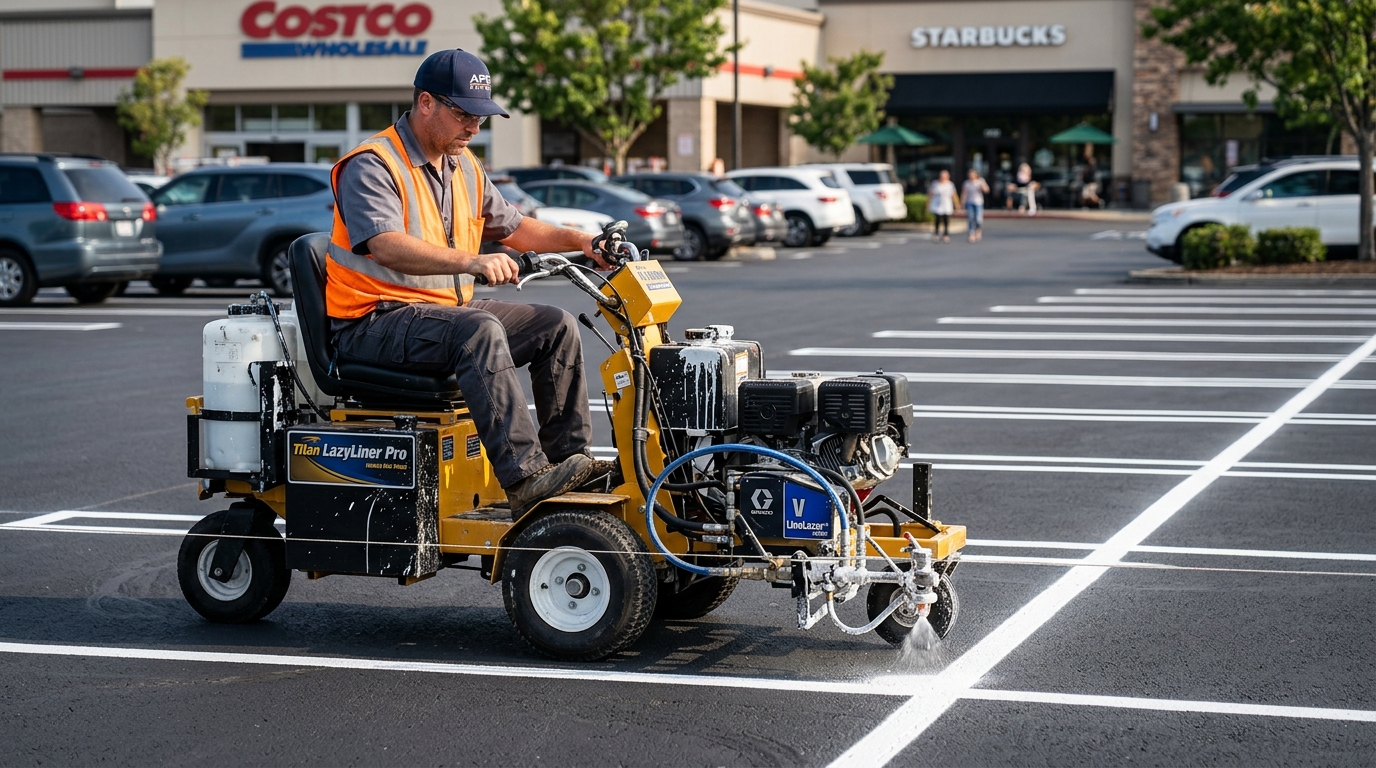
Line striping machine painting crisp white parking stall lines

Parking Lot Striping

We use laser-guided and GPS-assisted striping equipment to lay down straight, evenly spaced lines on the first pass, with consistent stall widths across the entire lot. This removes the guesswork that comes with hand-measured layouts.

Our crews apply DOT-approved traffic paint, including waterborne acrylic and solvent-based formulas, depending on the surface and traffic volume, with quick-dry options for lots that need to reopen the same day. We stripe standard parking stalls, directional arrows, stop bars, and crosswalks in a single mobilization, and every job includes an itemized quote listing square footage, paint type, and coat thickness before work begins.

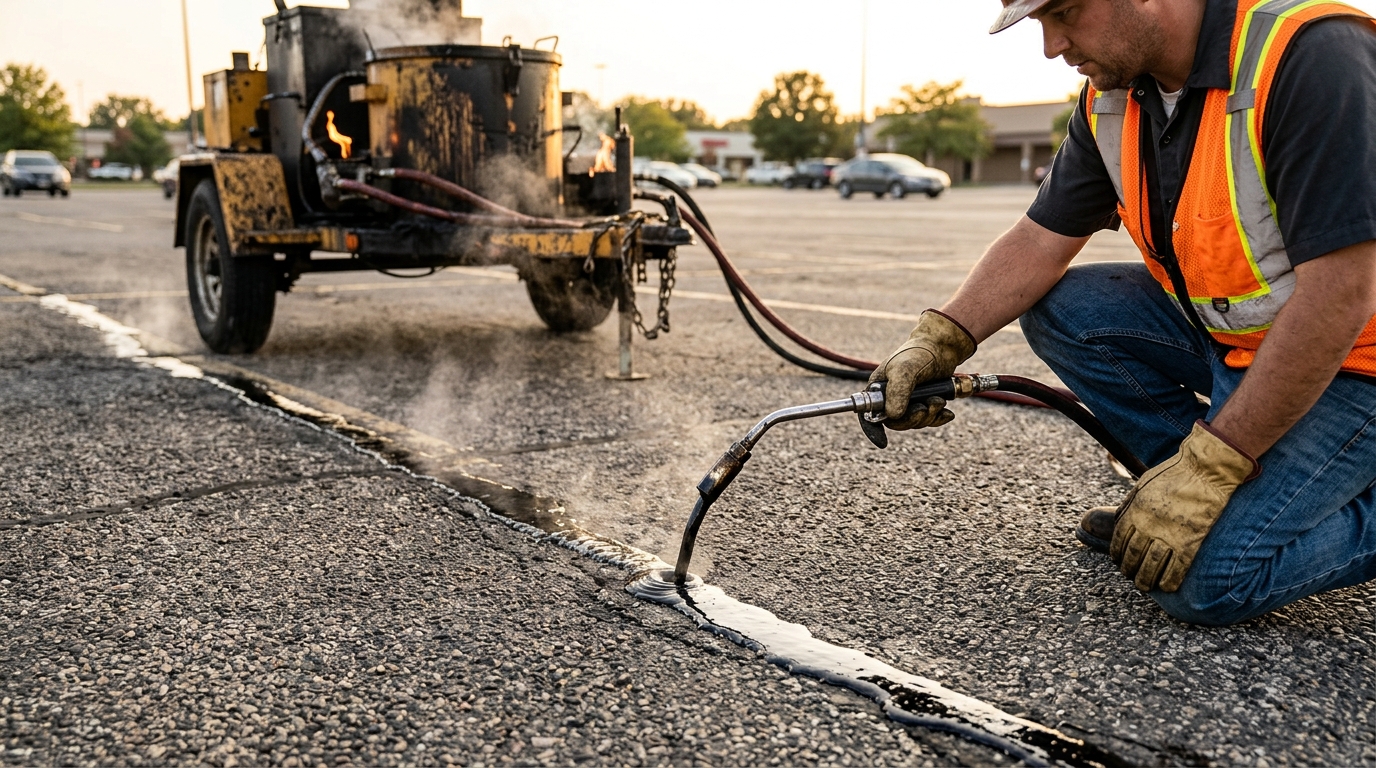
Worker filling an asphalt crack with hot rubberized sealant

Crack Sealing

Cracks left untreated let water seep into the asphalt base, accelerating potholes and structural damage. We use hot-pour rubberized crack filler for larger cracks and cold-applied sealants for smaller surface cracks, melted on-site and installed with a wand or pour pot so the seal flexes with pavement movement.

Before filling, we clean debris and vegetation out of each crack to ensure proper adhesion, and we always seal cracks before sealcoating whenever both services are scheduled together. It's the single most cost-effective way to extend the life of an asphalt surface between full resurfacing projects.

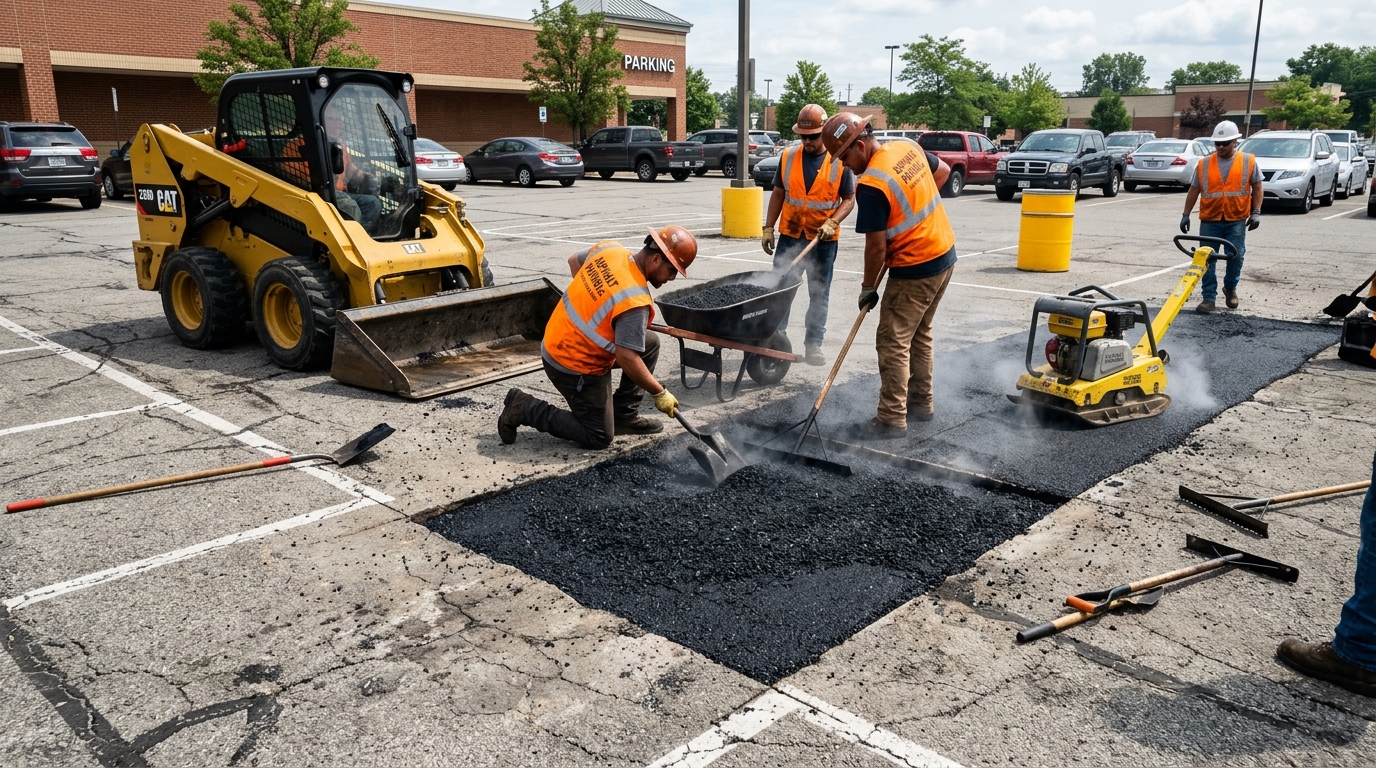
Crew repairing a pothole with hot asphalt mix

Asphalt Repair & Pothole Patching

Sealcoating protects asphalt, but it does not fix structural damage. Potholes, alligator cracking, and base failure require asphalt repair first, and we assess pavement condition before quoting any project.

We cut out failed areas, repair the base where needed, and patch with hot mix so the repair bonds and holds, allowing proper cure time before any sealer is applied. Skipping this step traps moisture and weak spots under a new coat and leads to faster failure, so addressing repairs first protects the sealcoating investment and supports a longer-term maintenance plan.

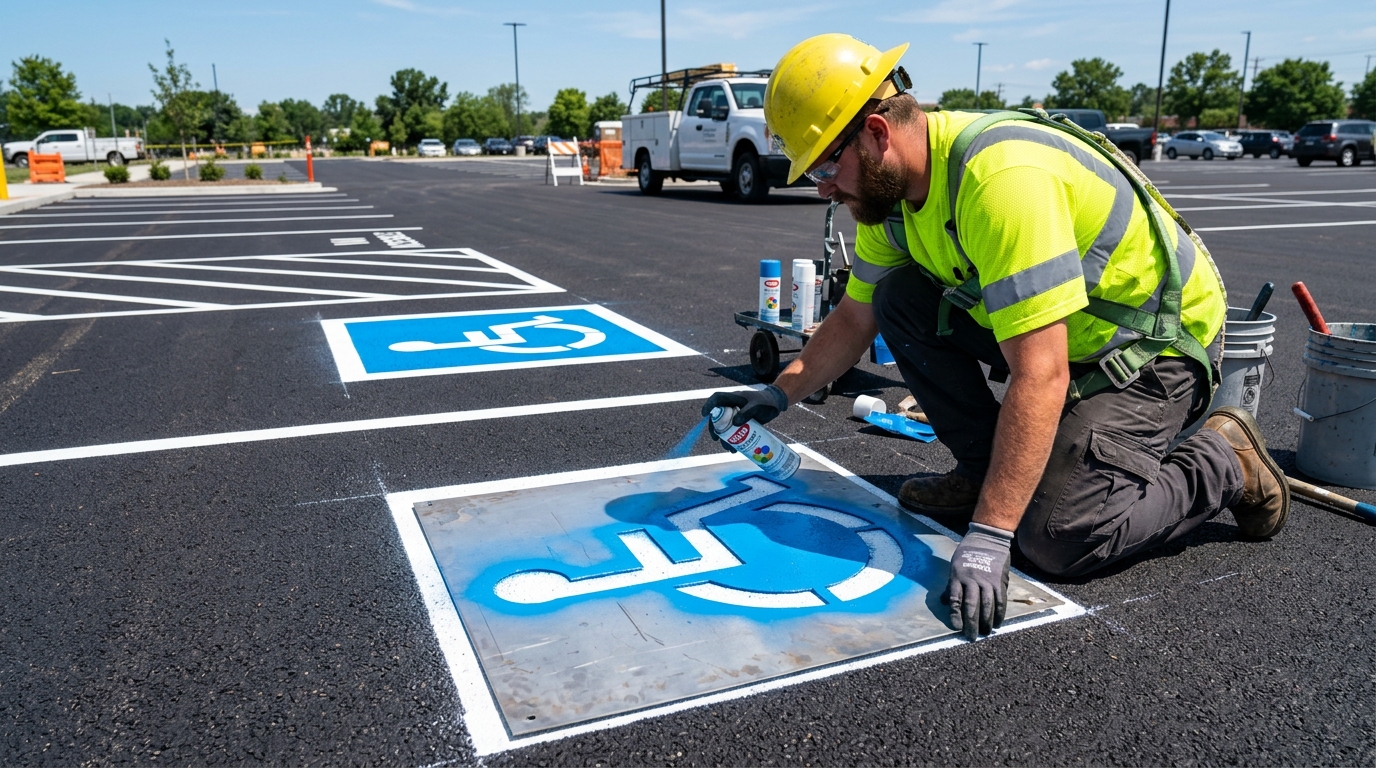
Worker painting a blue ADA accessible parking stencil

ADA Compliance Upgrades

We stencil handicap spaces, access aisles, and van-accessible symbols according to current ADA standards, with correct sizing, placement, and color contrast for both stalls and signage. Van-accessible layouts may use a 132-inch space with a 60-inch access aisle, or a 96-inch space with a 96-inch aisle. We review stall dimensions, aisles, signage, slopes, and accessible routes for the site.

Compliance protects property owners from fines and legal exposure tied to inaccessible parking, and we also stencil directional arrows and pedestrian pathways that guide foot traffic safely from accessible spaces to building entrances. Every ADA stencil job is documented with before-and-after photos, giving owners a record for compliance audits or insurance purposes.

Concrete wheel stops, bollards, and signage in a fresh parking lot

Signage, Wheel Stops & Bollards

We install premium concrete wheel stops anchored with rebar or epoxy to define stall boundaries and protect sidewalks, landscaping, and building facades, along with speed bumps, humps, and cushions selected for each lot's traffic speed and volume.

Bollards protect building entrances, utility boxes, and pedestrian walkways from vehicle impact. We core-drill footings to the required depth and set steel or concrete-filled bollards to load requirements, with reflective or painted finishes for low-light areas, and we install parking and safety signage at code-required heights and depths, documenting sign locations alongside striping records for future reference.

Maintenance

A Practical Maintenance Plan for Texas Pavement

Texas heat, sudden storms, and heavy traffic wear down asphalt faster than most property owners expect. Here's how to spot problems early, sequence repairs correctly, and keep pavement in service for years.

1

Asphalt repair

Potholes and base failures get fixed before anything else touches the surface. Sealcoating protects asphalt, but it does not fix structural damage.

2

Crack filling

Cracks are cleaned and sealed to stop water intrusion before sealcoating begins. Sealing over unfilled cracks reduces the lifespan of the sealcoat layer.

3

Concrete joint sealing

Concrete transitions and curb joints are sealed so moisture cannot undermine the asphalt edge and cause slab heaving.

4

Sealcoating

Applied only after repairs and crack work are complete and fully cured, in even coats matched to the surface texture and drainage.

5

Parking lot striping

Lines go down last, once the sealcoat has cured enough to hold paint properly. Skipping this order shortens the lifespan of every layer applied afterward.

Know the warning signs

Striping: lines that appear gray instead of solid white or yellow have lost most of their reflective properties and no longer meet visibility standards.

Sealcoating: pavement that looks dry, gray, or brittle has likely lost its protective layer against UV rays and moisture.

Crack sealing: cracks wider than a quarter inch let water reach the base and accelerate failure through freeze-thaw cycles.

We recommend inspecting parking lots twice a year, in spring and fall, since Texas weather shifts quickly between extreme heat and occasional freezes. For most jobs we schedule sealcoating and striping during off-peak hours or overnight and phase the work across sections of retail and multi-tenant lots, so a portion of parking stays available at all times.

FAQ

Frequently Asked Questions

The questions we hear most often from property managers, business owners, and facility directors across New Braunfels.

Pricing depends on square footage, current pavement condition, and the number of coats required. A standard restriping job for a mid-size commercial lot typically ranges from a few hundred to a few thousand dollars, while sealcoating is calculated per square foot based on material thickness and surface prep needs. We provide itemized quotes that break down labor, materials, and square footage before any work begins, with no hidden charges added after the job starts.

We recommend sealcoating every two to three years for lots with moderate traffic, and restriping annually or every other year depending on paint wear and sun exposure. High-traffic lots, such as those at retail centers or medical facilities, often need more frequent attention. UV exposure, oil spills, and Texas heat all accelerate wear on both paint and sealcoat.

For exterior lots we use DOT-approved waterborne traffic paint and durable acrylic formulas that cure quickly and resist fading from UV rays, rain, and vehicle traffic. Interior warehouse floors need a different approach: epoxy-based or solvent-based striping paint that bonds to concrete and resists forklift traffic, chemical spills, and heavy foot traffic without chipping or peeling.

Yes. We design new layouts that account for ADA-compliant handicap spaces, access aisles, and signage placement based on current federal and local code requirements. Fire lane striping is incorporated into the same layout plan, ensuring proper width, red curb marking, and "No Parking Fire Lane" signage where required, so you can pass inspections without needing separate contractors for each requirement.

Crack sealing fills individual cracks in asphalt with hot-applied rubberized sealant that prevents water infiltration. Concrete joint sealing addresses the expansion joints between slabs using flexible sealants that accommodate expansion and contraction. Sealcoating is a protective surface coating applied across the entire lot, shielding it from UV rays, oil, and water damage. Most commercial lots benefit from a combination of all three depending on pavement type and condition.

Yes. We install code-compliant signage including ADA handicap signs, fire lane signs, and directional markers, along with wheel stops that define parking boundaries and prevent vehicles from encroaching on sidewalks or landscaping. We also handle bollard drilling and installation, and traffic calming devices such as speed bumps to manage vehicle speed and improve overall lot safety.

Ready to Protect Your Lot?

Free walk-through, clear itemized estimate, no obligation.

(830) 402-1872 Get a Free Quote

Explore services and local coverage

Parking lot services

City service pages